Hi, I’m Wyatt.I’m building a computer network owned by the people who run it.
It runs on the laptops and phones people already have, instead of a few dozen data centers owned by a handful of companies. The testnet is live, there’s no token yet, and the network needs more node operators.
Bitcoin and Ethereum did this for money. I’m doing it for software.
And yes, this is the network from that ridiculous ad you just clicked.
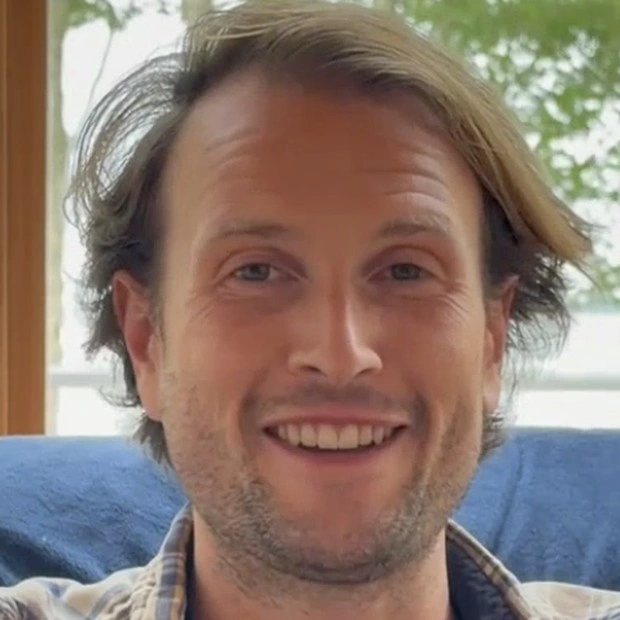
I’m a mathematician who builds distributed systems.
Some stuff I’ve built.Pick one and I’ll tell you about it.
What if an app didn’t need a company behind it for truth, trust, or escrow?
There has never been a way for software to be trustless. Every app on the internet needs an entity in the middle to run the operations, hold the money, and vouch for the results.
That’s the reason a corporation sits behind everything you use. It’s the assumption Reality removes.
Bitcoin and Ethereum removed it for money.
Every transaction carries its own evidence, so no bank has to vouch for it. Financial provenance.
Reality removes it for computation.
Every job carries evidence of how it ran, so no company has to vouch for it. Computational provenance.
Together, that’s the foundation new economic primitives get built on.
The first one is the rApp: any community, or any group of machines anywhere, can form an app, join the global network, and supply the compute it runs on. The app answers to the people in it, because they are also the ones running it.
Everything routes through an owner in the middle.
Peers, and every result carries its proof.
Apps with no company underneath
A rApp is a new primitive: software that runs on the network itself instead of on rented servers. Nothing sits in the middle of it. The money and the truth stay with the people using it, and there isn’t a company anywhere with the power to switch it off. Your community becomes your infrastructure.
Reality executes WebAssembly, which most mainstream languages already compile to. Rust, C, C++, Go and plenty of others can build straight to it today, so if your code compiles, it runs on Reality as it is. You deploy the compiled binary and define endpoints against it, the same way you would stand up an API.
Operator machines pull the binary through Portal, the app that turns an ordinary computer into a node, and execute it. That makes a node a general purpose execution environment rather than a validator replaying a fixed virtual machine. There is no contract language to learn and no rewrite, which is the difference between porting your software and rebuilding it.
Any machine on earth can join
Permissionless means exactly what it says. Nobody approves you, nobody can remove you, and there’s no minimum buy-in. Any machine can download Portal, the app that turns an ordinary computer into a node, and start contributing to the network today.
Sybil resistance runs through 2MEME, a reputation layer built on entropy. Every node continuously submits its own independent view of network state, and principal component analysis across all of those views separates the machines describing the same consistent picture from the ones that are lying or malfunctioning. Honest behavior is coherent; fabricated behavior shows up as an outlier.
Reputation accumulates from that observed behavior over time, so influence in the network is earned by participating honestly rather than bought with hardware or locked capital. Faking it means an attacker has to consistently mimic the coherent majority across time, which is the expensive part, and it’s why the network never needs anyone to burn electricity to prove they exist.
Compute anyone can check
When a stranger’s machine finishes your job, you don’t take their word for it. The result comes back with a mathematical proof that the work ran the way it was supposed to, and anyone can verify it.
Historically, proving a program meant re-expressing it by hand as arithmetic circuit constraints in a special proving language. That step is so expensive that only small, purpose-built programs ever got proven, which is why proof systems stayed a niche instead of becoming infrastructure. Reality generates proofs over WebAssembly bytecode as it already exists, so anything that compiles is provable without being rebuilt.
The proofs themselves are ZK-STARKs: no trusted setup ceremony, and built on hash functions rather than the elliptic curves a quantum computer could eventually break. To our knowledge, Reality is the first decentralized application in history to use ZK proofs to host Turing complete code on a distributed system.
So: a decentralized, permissionless network, made of machines that ordinary people already own, running any software on earth and proving every bit of it. Some people have been calling that a world computer for about a decade now.
You’ve seen a hundred of these. Here’s what’s actually left to solve.
Tap an era
 CYBERLETE
First rApp on the network
CYBERLETE
First rApp on the network
The players are the anti-cheat.
Cyberlete is an AI anti-cheat for competitive esports. It watches a match and judges what each player does, checking whether a move was physically possible at that person’s machine. The rApp runs on the players’ own machines, so the people in the match are the ones deciding who was human.
Around 80% of competitive players have run into cheaters, and plenty of those matches are played for money. The decision comes back in under 15 milliseconds, faster than the eye blinks.
“I read the Bitcoin whitepaper and thought: you could build an anti-cheat out of this.”
“We’re taking in so much data, so fast, that it just becomes too expensive to run on other chains.”
Geoffrey MaunusCyberlete Co-founder
All of that runs on machines belonging to people like you.
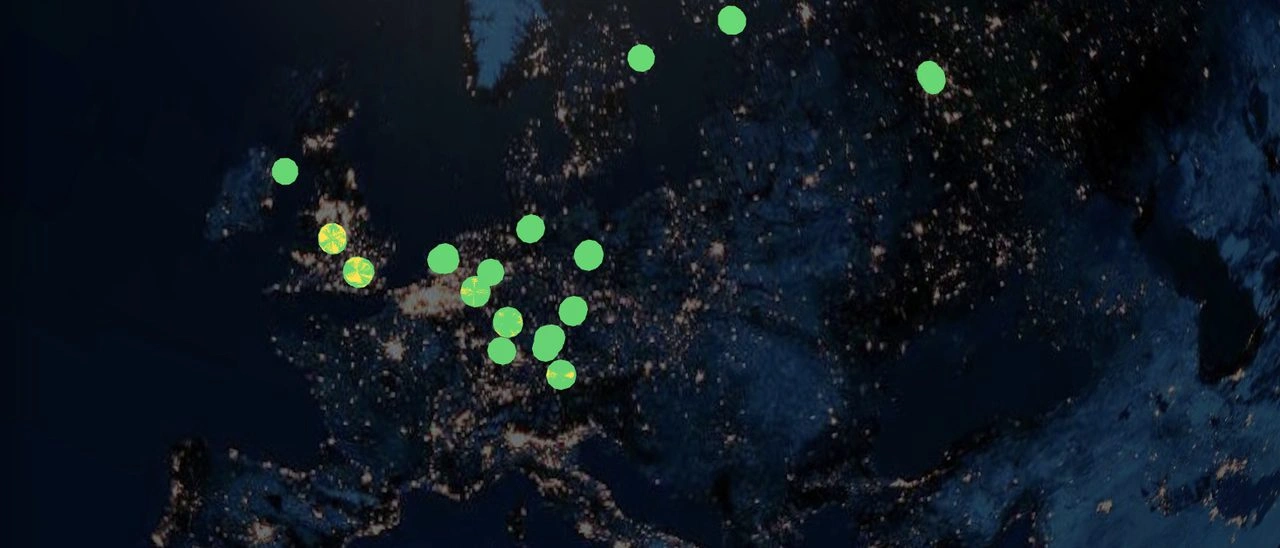
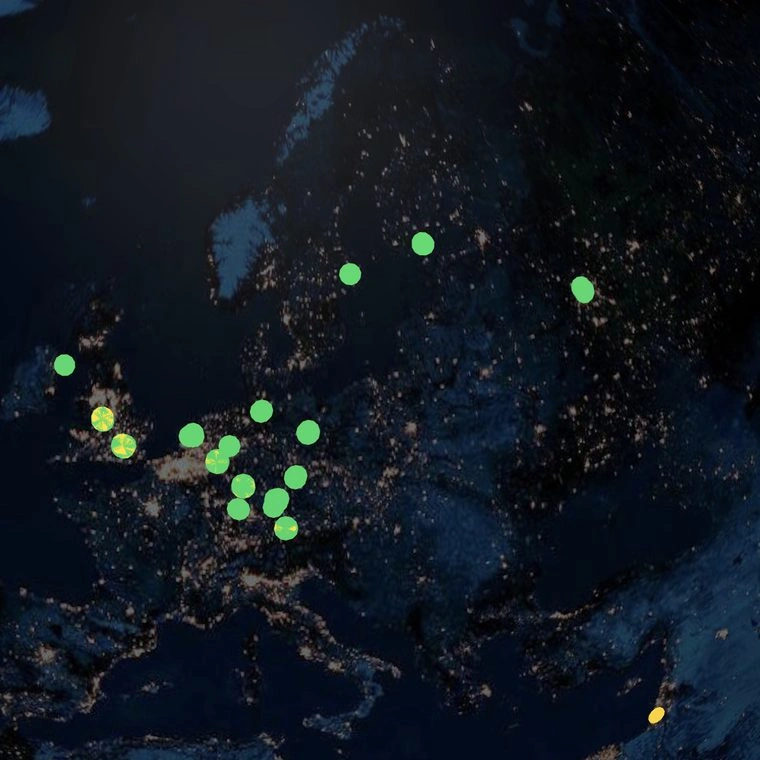
Not a data center. Laptops, desktops and phones in about forty countries, each one picking up work and handing back a proof. You can watch network state from inside Portal five minutes after you install it.
She knows everything about Reality.

The Oracle is a GPT trained on the whitepaper, technical docs and founder interviews. Chat with her to find out how Reality works and how it compares to everything else out there. If you’d rather interrogate the claims on this page than take them, that’s exactly what she’s for.
Reality Oracle Early operators who want to help build a decentralized layer for the internet.
Our mainnet token has not launched. What we’re doing right now is finding the people who want to co-create this thing, and getting node operators onto the network in as many countries as we can reach.
Three steps, about five minutes.
Join the Discord
It’s where builds get posted and where the community walks you through your first run.
Download Portal
Portal is the Reality node in one app for Mac and Windows, with nothing to configure. If Linux and a terminal are more your thing, there’s a server route for that too.
Click share compute
Your machine joins the network and starts picking up work. That’s the whole setup.